Latest Post

July 4th, 2009

Haskap / Honeyberry Pictures (After Three Years)

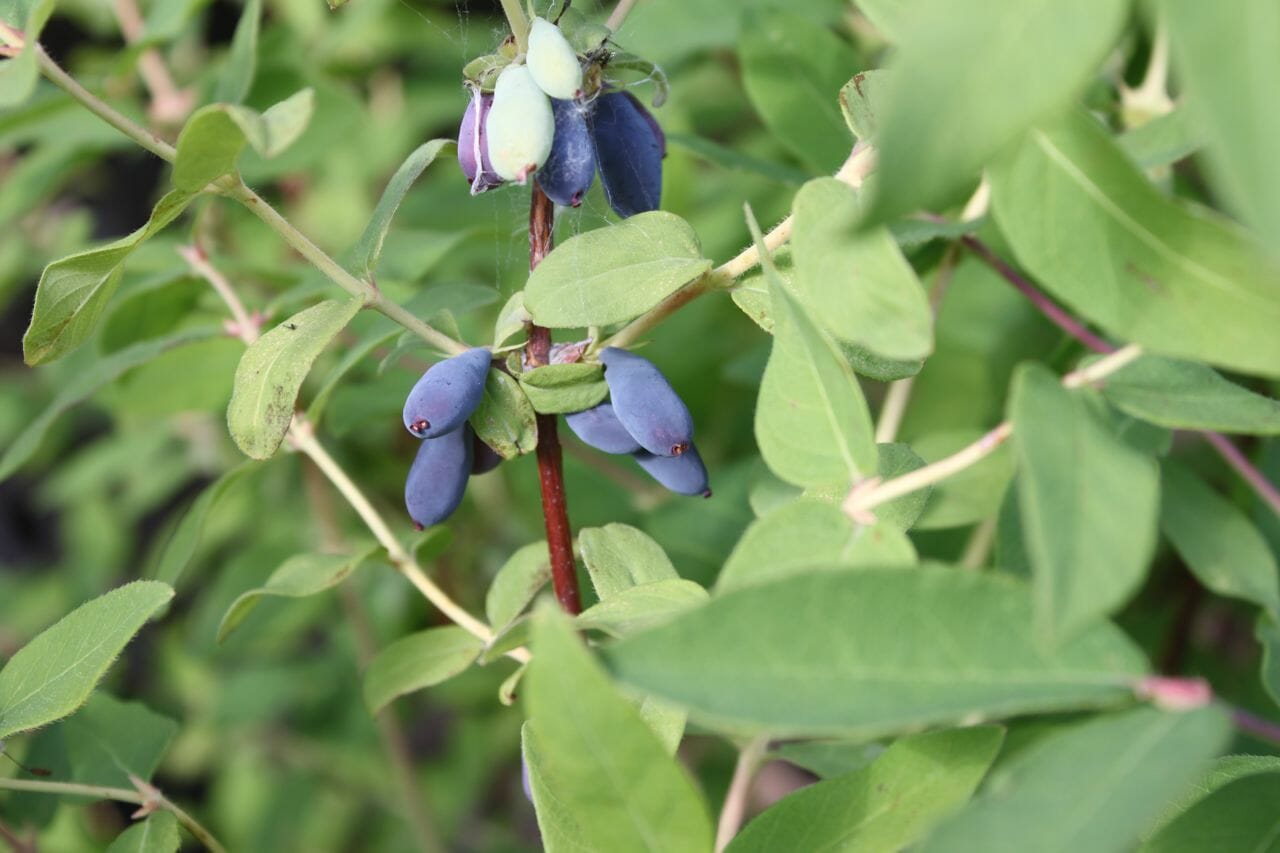
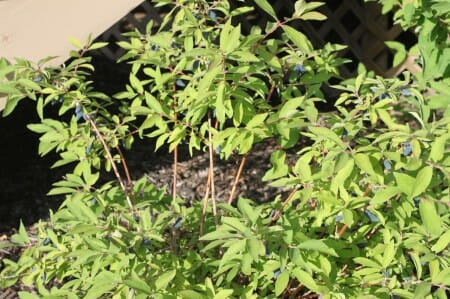
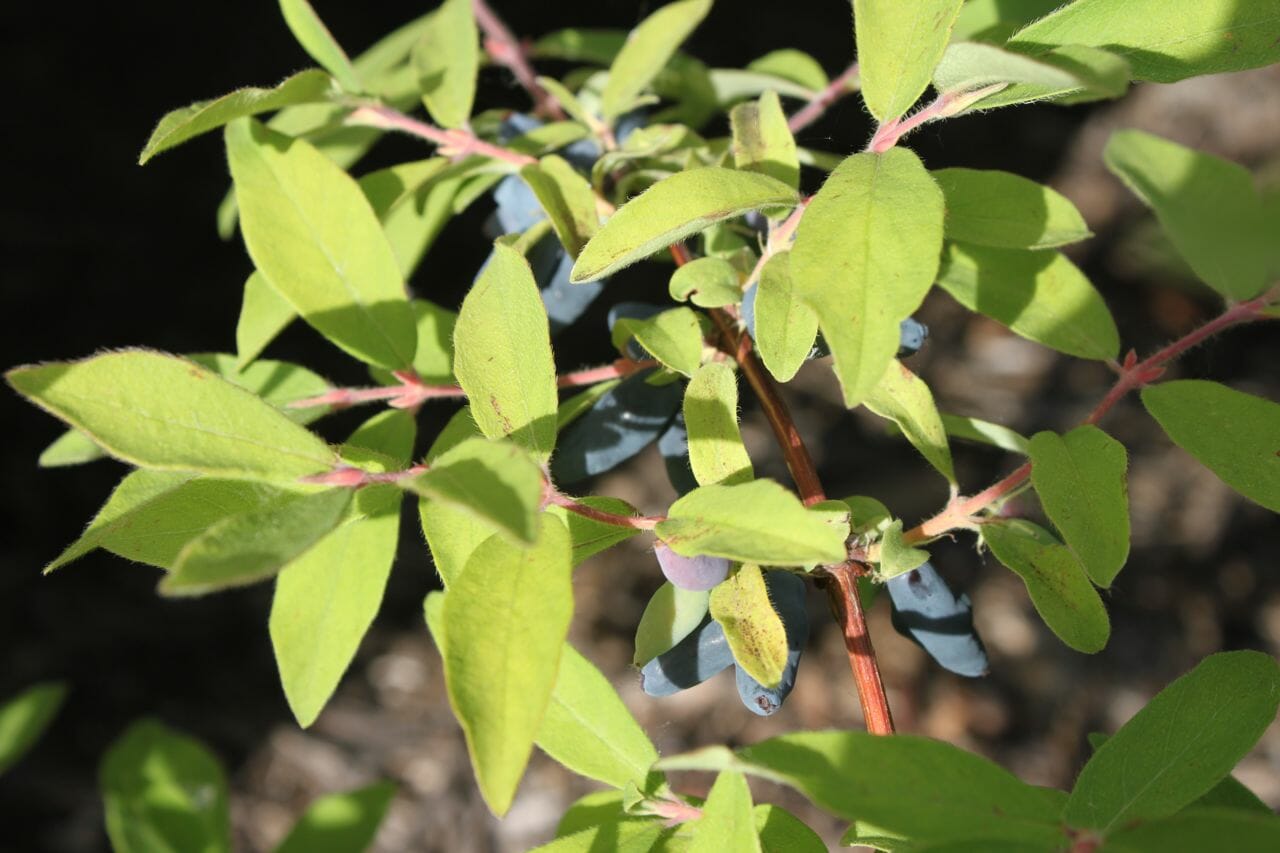
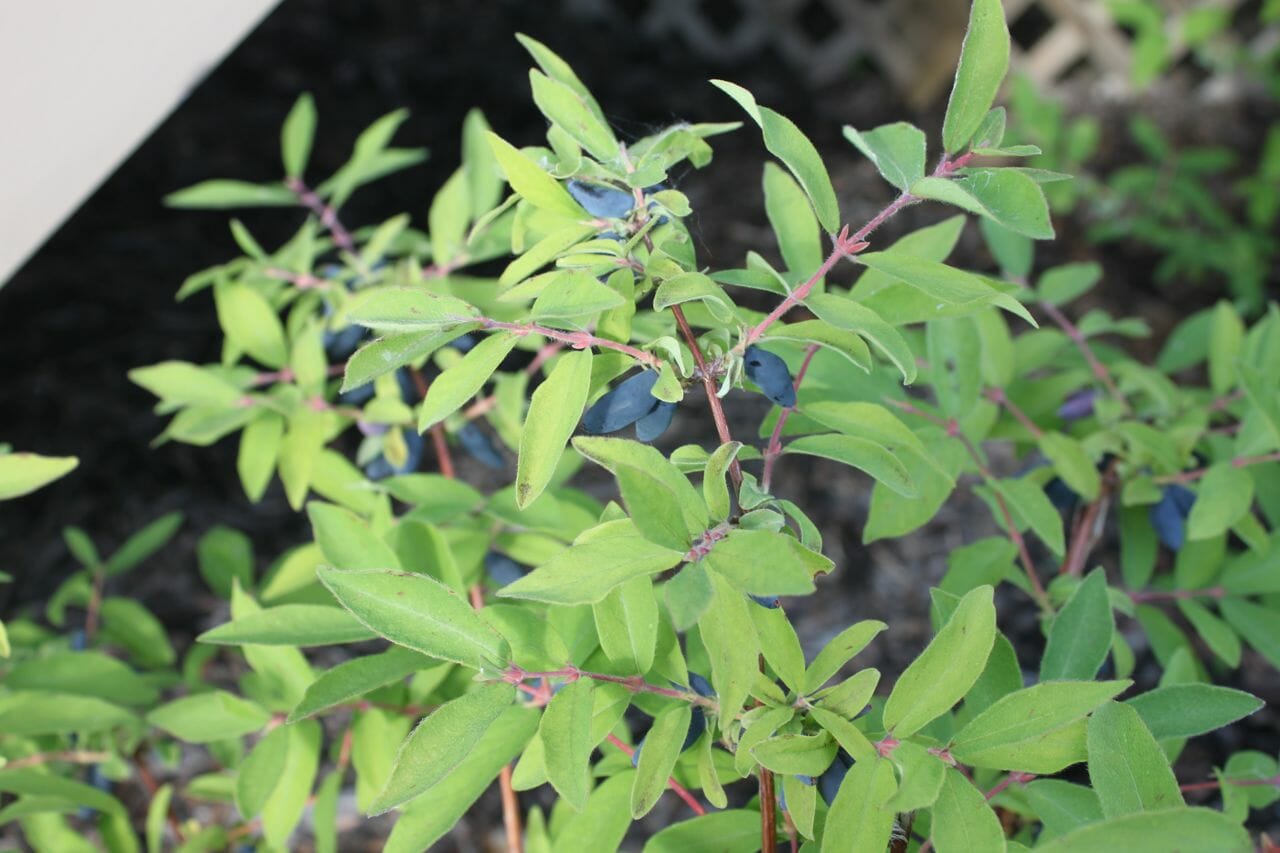
As promised earlier, here are a few haskap/honeyberry pictures. These were four inch seedlings about three years ago. They have been grossly neglected, but they seem to be doing just fine. This is the first year to get a significant crop of berries.

Honeyberries

A close up of a berry.

Haskap Berries

Not so close up of several berries – I see about 12 ripish berries.

Three year old Haskap

This is right on the southwest side of the deck – it’s a solid three feet tall.

Three year Old Honeyberries

This is out kinda in the middle of the lawn. It’s starting to make a nice hedge.

June 24th, 2009

Haskap/Honeyberries 2009 Update

All I can say is WOW! These haskap are amazing! As most of you know, I moved last summer and had to leave behind my haskaps just as they were starting to produce. I got a few small handfulls from my two dozen plants. Well, just yesterday I went back to visit my brother-in-law (who now lives at my old place) and saw the haskap. I was blown away! The plants had more than doubled in size this year and were covered in little berries. Most were green still, but there were some ripe enough for a taste test. It was a slow start, but wow what a jump from 2008 to 2009! I’ll certainly be planting more haskap at my new place!

Haskap Berries

Sorry about the old picture – this is actually a picture of last year’s berries. I didn’t have my camera with me on this trip, but I’ll sure try to get out there again for a few pictures!

June 5th, 2009

Stump Grinders: A Necessary Evil

The next step in landscaping our yard was removing the four large stumps from what would soon become the garden. We had two maple stumps and two poplar stumps. So we rented a stump grinder (to the tune of $160) and went to work. And boy, oh boy, was it ever work! The stump grinder worked great, but it sure took a lot of muscle, a lot of time, and a lot of dirt in the face.If you’ve never used one before – imagine it as a cross between a chainsaw and a rototiller.

Stump Grinder

My brother-in-law was kind enough to help and so we were able to take turns running the machine. All said and done it took an average of a little over one hour per stump. Oh, and of course, the handle on the pull cord broke off, so we had to…. [things that our rental agreement said not to do...], but my neighbor is a small engine mechanic so he saved the day and another $160 for us!

Now with the stumps gone, four holes in the ground, and a whole pile of mulch – it’s time to move some dirt around. Who knows – I may just get a late garden in after all!

May 23rd, 2009

A New Home – A New Garden

Last summer I bought a new house – as I’ve eluded to in some of my recent comments (and as evidenced my my lack of new posts since last August). The house had just been moved in and placed on a new basement, so there had been no landscaping done after the excavation and most of the back yard was still in it’s undisturbed state (as it had been for the past… 50 – 100 years?) There were a few rotting trees that were eager to fall on the power lines, so we decided it best to remove them even though it left us with a pretty bare yard.

We wanted to live in the house for a while before we made landscaping plans so we would know what exactly we wanted, so we didn’t do much in the way of landscaping last fall, except for removing the previously mentioned trees. Of course, with no garden I really didn’t have much to write about, so that’s why I’ve been a little absent (though I’ve enjoyed replying to your comments on my other articles).

But here’s the good news… I’m back! Over the winter I drew up a concept plan for our yard (seen a little further on in this article) and we are now working to making it all happen. Hopefully, as I keep you updated on my progress, you’ll see some dramatic changes. So to fully appreciate the before and after, here are a couple of before pictures:

This is in April, scraping back the black dirt… (Looking out from my back steps)

Scraping back the black dirtThen this is earlier today… (looking towards the house from the back alley)

Before LandscapingSo it’s a pretty empty slate, but with lots of possibilities. Here’s what I plan to do with it:

Concept Plan

I’m going to be a bit late planting in the garden this year, but that & the greenhouse are my #1 priority. (Hey, you might get another tutorial on how to build a greenhouse.) But that’s for another day!

April 18th, 2009

Hoop Frame Greenhouse in New Zealand

It seems everyone is in the greenhouse building mode! Ok, well, maybe not EVERYONE, but many are. I’m still working on plans for my next  greenhouse, but until then I wanted to show you another greenhouse that was built from my plans in my article “How to Build an Inexpensive Hoop-Style Greenhouse“. This one is from Farshid out of New Zealand. It took him three afternoons to build (after work that is), and cost about $200 NZ – that’s about $137 Canadian.

Hoop Frame Greenhouse in New Zealand

Hoop Frame Greenhouse in New Zealand

Thanks Farshid! Looks great!

April 13th, 2009

My “Inexpensive Hoop-Frame Greenhouse” Design in Nova Scotia

Recently I received a comment on my post “How to Build An Inexpensive Hoop-Frame Greenhouse” from Stacy in Nova Scotia. Using the design she found at AlbertaHomeGardening.com, she built a 10 x 22 greenhouse. I asked her to send along a few pictures and she did. So I thought it would be good to share them with you to show you another example of how you too can build your own greenhouse. So here is her comments and her pictures. Thanks Stacy!

Well, we just built this greenhouse, with a few changes, we made ours 10×22. We put a piece of strapping 2 feet off the floor running the length of the greenhouse to sturdy it up. We also used strapping in the top centre (instead of pipe and zip ties)attached to the hoops with the metal electrical bands , we got a box of 50 for 8$.

Nova Scotia Hoop-Frame Greenhouse
It was complete in 2 days! Its wonderful! When we bought our farm it came with a huge pile of electrical conduit, enough for 3 or 4 of these greenhouses. We plan to build another very soon. We couldn’t have been happier to find this design! Good job!

Nova Scotia Greenhouse
It is now full of many vegetables, flowers and herbs getting ready for the upcoming season.
Happy gardening,
Stacy

December 10th, 2008

Block Planting Carrots, Onions, Lettuce, & Dill

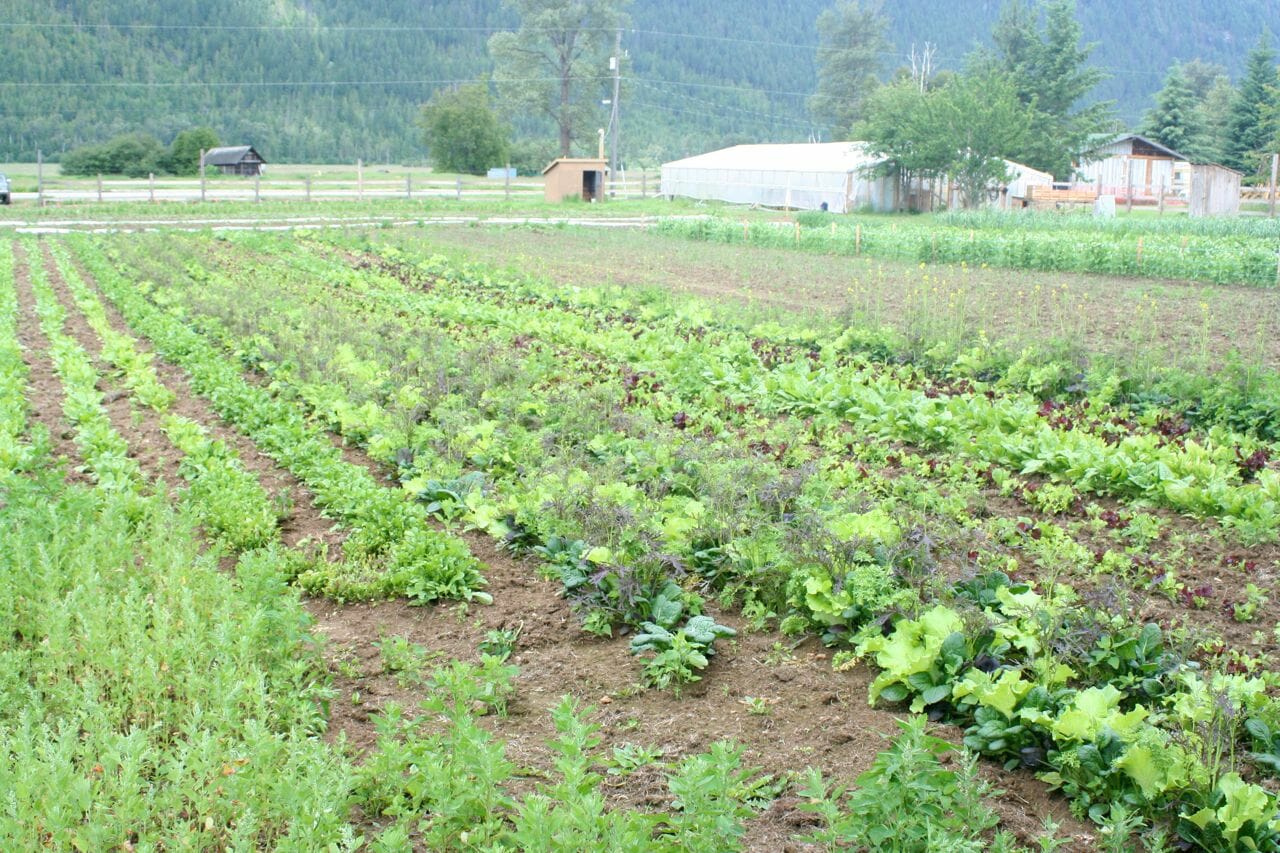
I had a comment today on my post regarding square-foot gardens asking about some pictures of how my block planting had turned out this year. I had taken the square foot garden method and applied it to the traditional long-row garden style. I planted carrots, onions, lettuce, beats, dill, and a few marigolds to try to keep the bugs off the dill (which didn’t work – they flowered too late I think). But the block planting idea worked great. I think I’ll do the same thing next year. The lettuce should have been thinned out big time, but other than that, I’d do it all over again the same way. Here’s what it looked like:

Block Planting Experiment

This was in early summer. I should have been thinning my lettuce right about now.

Block Planting Experiment

This was about mid-August. You can see where the deer pulled out all of my beets just behind the onions.

So do I recommend this method? Yes. For any plant that doesn’t take up a lot of horizontal space, this method works great.


August 14th, 2008

Does Companion Planting Work? Just Ask My Beans!

After quite a bit of reading about companion planting, last spring I decided to try it.

Exactly what is companion planting, you ask? Companion planting is simply the process of planting different plants together that mutually benefit from having each other around. Native Americans used to do this with their corn, pole beans, and squash. They would make little mounds and plant several corn in the center. As the corn grew they would plant beans and squash around it. The corn provided the poles for the beans, the beans provided the nitrogen for the soil, and the squash acted as a mulch – preventing weeds and retaining moisture.

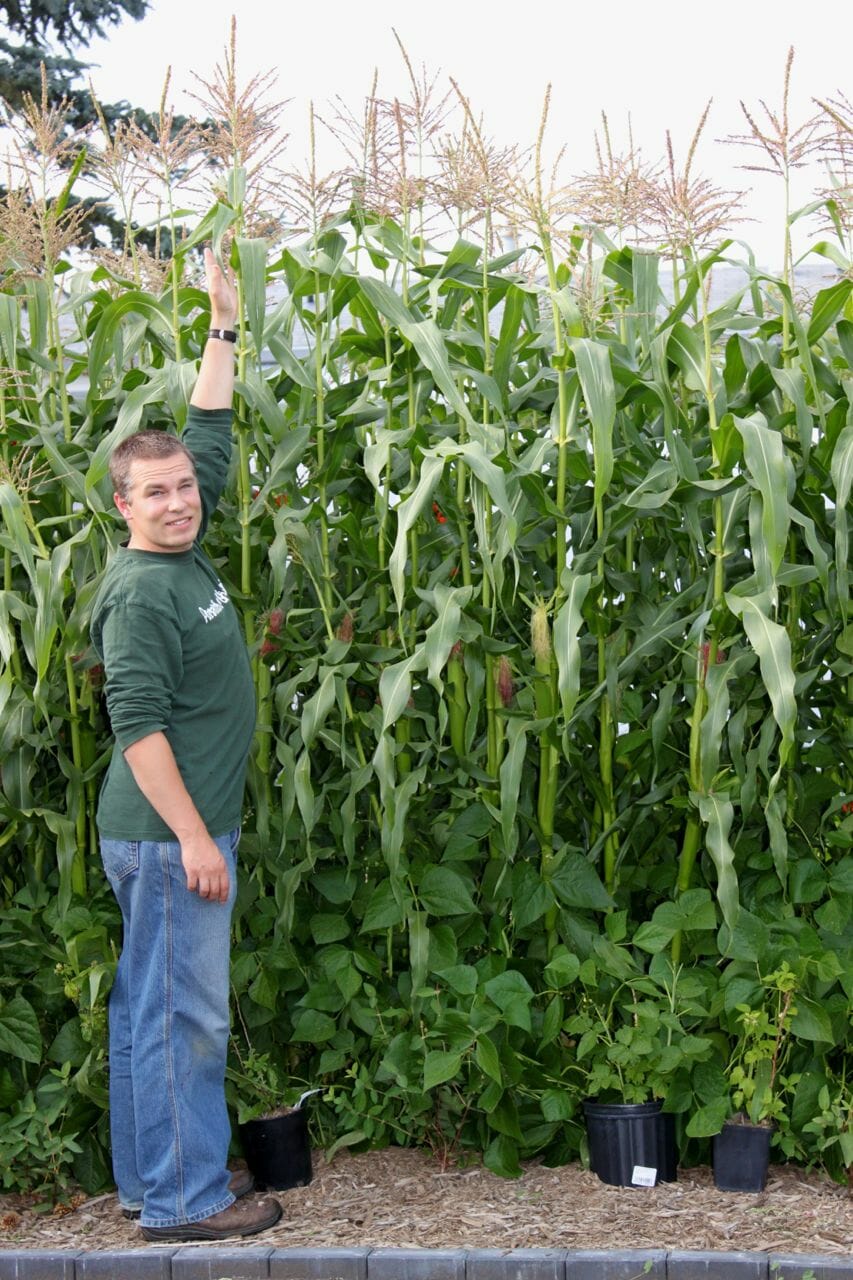
So I decided to give it a try – though not exactly as the natives did. I planted my corn in a block about 25 feet long and six feet wide with two feet between stalks. The corn was double planted and I planted two regular bush-type beans between the corn stalks. In the end, it looked like this…

Corn & Beans Interplanted

Yesterday I picked the beans. When I compared the beans planted with the corn, they were much bigger than the same beans planted elsewhere in the garden. I was impressed. Companion planting does indeed work! So next year I thing I might try a few more combos.

Try These In Your Garden

Onion – plant with parsley to keep away onion fly
Celery – plant with cabbage, broccoli, or cauliflower to deter butterflies (grows well with beans, tomatoes, and leeks)
Asparagus – plant with tomatoes, parsley, or basil
Swiss Chard – plant with cabbage, broccoli, cauliflower, onions, lettuce, or herbs – do not plant with string beans
Beets – plant with kohlrabi, carrots, cucumber, lettuce, onions, cabbage, broccoli, or cauliflower – do not plant with string beans, dill, or fennel
Brussels Sprouts – plant with onions
Cabbage – plant with herbs, onion, garlic, peas, celery, potatoes, or beets
Kohlrabi – plant with beets or onions
Peppers – plant with basil, okra, or tomatoes
Cucumber – plant with corn, sunflowers, peas, beans, beets, or carrots
Pumpkin & Squash -  Plant with corn, peas, or beans
Carrot – Plant with onions, annual flowers, lettuce, radishes, tomatoes, or peas – do not plant with anise and dill
Lettuce – Plant with cucumbers, onions, radishes, carrots, or dill (dill protects them from aphids)
Tomato – Plant with basil, parsley, and asparagus or French marigolds (French marigolds deter whiteflies)
Bean – plant with celery, corns, cabbage, broccoli, cauliflower or melons
Peas – plant with beans, root crops, potatoes, or corn
Radish –  Plant with peas or lettuce
Potato – plant with corn, cabbage, beans, or marigolds
Spinach – plant with beans, peas, corn, and strawberries
Corn – Plant with beans, peas, sunflowers, cucumbers, squash, melons, and potatoes

August 7th, 2008

The Saskaberry Ranch near Olds

The Saskaberry Ranch LogoMy love of fresh fruit has kept me on the trail to experience the many upick farms central Alberta has to offer. Yesterday I found myself at the Saskaberry Ranch west of Olds. This was not the first time I had been there. In fact, I’ve been there dozens of times before. And not just for the fruit (although that is an attractive feature). Most of my visits occur because I’m related to the owners. The Saskaberry Ranch is owned and operated by my brother Phil & his family. (I even had the joy of helping plant many of his saskatoons…) That being said, I’ll do my best to remain unbiased in this review – though I won’t guarantee anything.

My Experience

When I was a kid, I used to pick the wild Saskatoons that grew on the edges of the fields. I could pick for an hour and get only a quarter of an ice-cream pail full of saskatoons. Not so at the Saskaberry Ranch! Yesterday I picked for about 30 to 45 minutes and my pail was right full.

Bucket of Saskatoons

Absolutely fantastic! My son (about a year and a half old) was with me and believe it or not, I could fill my bucket quicker than he could empty it! He doesn’t say many words yet, but he did say “Mmmmm Mmmmm” quite a bit yesterday!

Large Cluster of Saskatoons

But I should mention that there is more to the Saskaberry Ranch than just piles of saskatoons. They also grow raspberries, strawberries, cherries, potatoes, onions, carrots, snow peas, and a whole host of other vegetables. Weather has certainly been an issue this year and both the cherries and raspberries are pretty sparse, but the saskatoons are absolutely amazing!

Sweet Raspberries

One Final Word

The Saskaberry Ranch is the place to go for saskatoons. You’ll find lots of other stuff while you’re there too, but if you’re in the market for saskatoons, I’ve found no better place. And at a mere $2.00 per lb, it’s a great price too.

Want to Visit The Saskaberry Ranch?

Here’s what you need to know:

Location:

They are just west of Highway 22 on Range Road 324, 2.4 km south of Highway 27 or 66 km north of Cochrane.

Produce:

Saskatoons, Raspberries, Strawberries, Potatoes, Assorted Vegetables

Prices:

At the time of this article, $2.00 per lb. for saskatoons, $3.00 per lb for raspberries

Other Info:

You can visit the Saskaberry Ranch online at http://www.saskaberryranch.com or send phil an email at phil@saskaberryranch.com. Additionally, you can call (403) 507-8994 for anything else you need to know.

August 3rd, 2008

Prairie Perfect Orchards near Innisfail

This weekend was the annual Summertime Country Drive (a collection of 25 central Alberta farms & attractions). One of the destinations along the way was Prairie Perfect Orchards – a brand new fruit farm featuring cherries, honeyberries, and apples. Although this was just their first year open to the public, they easily win the “Best Presentation Award”. Their grounds are beautifully landscaped and well kept, facilities are clean, there are attractive signs everywhere so you never get lost – and even the grass was weed free!

Prairie Perfect Orchards

My Experience

First impressions were great. As I stated above, everything was beautiful. After we parked we walked towards the main building and were cheerfully greeted by the owners. Although we caught them between seasons (too late for honeyberries, and about a week too early for cherries), they offered us samples of cherry sauce [for ice cream and such], cherry jelly, and a delightful rhubarb beverage. We also got a tour of the apple orchard and the cherry orchard.

Apple Orchard

The apple orchard [pictured above] was not yet in production, but it is expected to come online by 2010. Our host named a half a dozen+ varieties that he was growing – all the best apples that grow in this part of the world. I’ll be interested to check out this orchard again in a couple of years.

Cherry Orchards

The cherry orchard was beautiful – with cherries just dripping off the young plants. There are at least five varieties that I remember – the Romance Series cherries that were recently developed at the University of Saskatchewan. They are just four years old now (I believe) and will be ready for the picking in about a week’s time through to autumn.

A Final Word

Although I’ve never yet picked a single berry at Prairie Perfect Orchards, I certainly plan to. If your looking for cherries in the central Alberta area, this is the place to go. And if you’ve never been to a upick farm before, this would be a great place to be introduced. Their pristine property feels more like a park than a farm and I feel they will only improve with time.

Want to Visit Prairie Perfect Orchards?

Here’s what you need to know:

Location:

From QE#2 take the Cottonwood Road exit (just south of Innisfail), travel west to RR#14, north 2 miles (3.3 kms.) to Twp. Road 354, west 1.8 kms. to the orchard on the north side of the road.

Produce:

Cherries, Honeyberries (and soon apples…)

Prices:

Not sure – I’ll update when I go pick cherries!

Other Info:

You can call (403) 227-1301 or email pjwasylyshyn@hotmail.com for more information