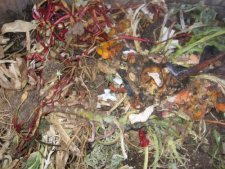
 Who knew that throwing all your dead plants, moldy vegetables, and manure from your pet pig in a big pile to let them rot, and then growing your own food in that stuff would be a great idea? Go figure, eh? But that pile of mushy tomatoes and wilty carrots is one of the best things you can do for your garden. Full of the very things your plants need to thrive, compost is a gardener’s black gold.That’s why I decided I needed a compost pile. After all, I had the space, I had the ingredients, and I had the motive – why not make my own compost? After all, how hard could it be?
Choosing Your Compost Container
First of all I had to decide what to put my compost in. Should I buy a fancy plastic tumbling composter? Nah, I’m too stingy thrifty. Although a plastic bin would be a little more pleasing to the eye, I wanted something I could make myself that wouldn’t cost me a lot.
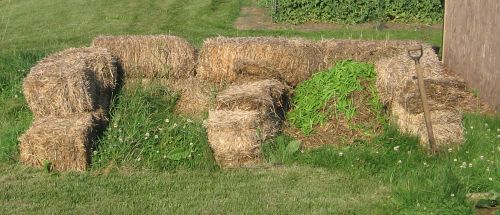
This was my first attempt – the straw bale compost pile. I chose a two-section design for easy mixing. I wanted to fork the pile from one section to the other when the pile started to get too big. The straw bale compost pile had it’s advantages and it’s disadvantages. On the plus side, it was easy to make. And it was cheap. Free, actually. And the bales could be slowly worked into the compost itself and new ones could replace them. On the downside, it was ugly and messy. It was also difficult to create a large enough pile (as you need a significant volume for compost to work best) without spilling all over.
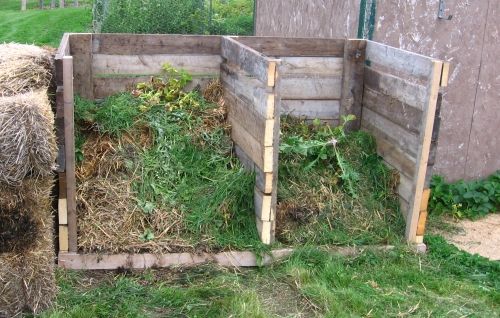
So this was my upgraded version. I had some scrape lumber behind a shed, so I made this one to replace the bales. I gave it higher walls, and kept the two-section design. One thing I may do in the future is to give it a short wall along the front, since things are starting to spill out.
What To Feed Your Compost Pile
It may sound odd, but our family treats the compost pile much like a family pet. The care for both of them is quite similar. First of all, your compost pile needs food. We regularly feed our compost pile a wide selection of potato & carrot peels, apple cores, wilty lettuce leaves, and even egg shells – never any meat, grease, or bread. though. In the summer we give it the weeds and in the fall, we feed it all of the plants from the garden, leaves, a little bit of grass clippings, and some straw. We had a pet pig last winter, so even he contributed his part to the compost pile via his manure.I’ve also discovered that compost likes water. Without water, your compost pile just sits there. And sits there. And sits there. So, if there’s not been much rain, I water the lawn, the garden, and yup, the compost pile. But try not to over do it either – the worms that love your compost don’t care to be drowned.
Six “Must Have” Tips For Efficient Composting
- You must have enough volume. In order for compost to be compost and not just rotting vegetables, you need to have at least three square feet of volume.
- You must have greens and browns. Greens are things like your wilty lettuce leaves and apple cores and potato peels. Browns are things like dried leaves, straw, or even small branches.
- You must have everything chopped up into small pieces. The smaller the better – but it depends on how much work you want to put into chopping and mashing things.
- You must have water. We talked about this already. No water = no compost.
- You must have air. This means mixing. The compost at the center of your pile can’t get any air unless you mix it. So either grab the pitch fork or consider getting on of the fancy plastic automated mixing bins.
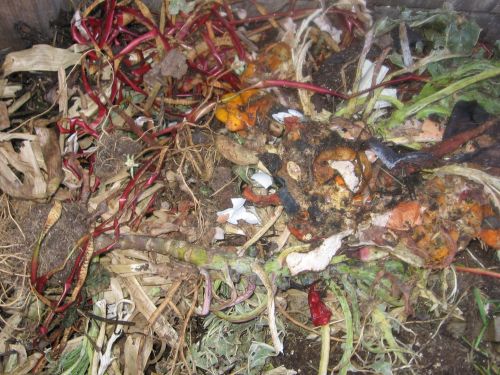
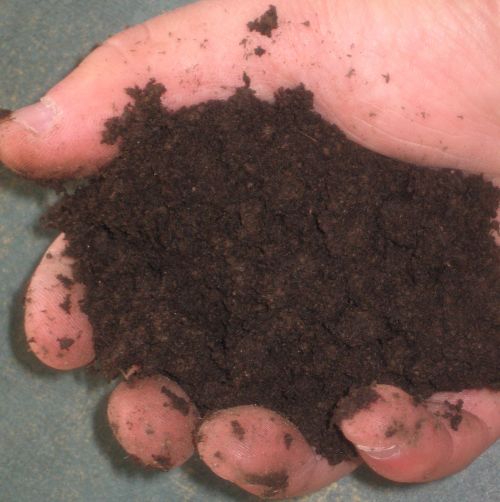
- You must have patience. Sorry. It won’t happen in a day. Depending on how you do on the other must haves, it can take anywhere between three weeks to a year to go from this…
4 replies on “Composting Made Easy… Or Something Like That”
Wonderful simple article. The 6 points of interest are the core and clearly tell the simple story of organized rotting matter… Which is composting.
I love your article on composting. People get too meticulous and read too much stuff and make it more complicated than it really is. I live a little more north in borealis and we are blessed to have quite a bit of natural landscaping in our yard, that is tons of trees on the borders, at least 75ft tall. This spring, I took a walk through the trees and the ground was so soft, just like I want my garden to be. I realized that this is the perfect place to compost, most naturally. Under the leaves and pine needles and cones that have piled up over the years, there is rich black soil. I tested it and found it to be super high in phosphorus and potash. Lacking nitrogen, but that is always a challenge, isn’t it? At any rate, all our grass clippings and twigs and cones and the copious amount of leaves get dumped into the trees, along with the kitchen scraps. I have been using last years leaves as mulch and it works beautifully, and it will eventually turn to compost in the garden. I also used leaves in my potatoes instead of straw. They are looking good. The big point is, there is no such thing as yard “waste”. Our city has a yard waste pickup bi-weekly. There is no way that I am letting them get their hands on my stuff. People bag it up and ultimately, end up having it sold back to them as finished compost because they didn’t know that is what it was in the first place. How crazy is that? I know what you mean by “pet”, too, since I also enjoy worm composting. They are my pets and serve me and my garden well. You can make compost tea from any compost, but worm compost is best. I was able eliminate some nasty bugs on my cherry tree and it also makes fantastic fertilizer. I use worm compost sometimes on my outdoor compost as compost accelerator too!
I have 100-120 square hay bales that ae about 4 years old and need to moved by saturday, if any one is interested.
I just moved from Edmonton to a beautiful acerage outside of Tofield and can’t wait to start my garden. My question, to anyone, is can you compost through the winter and if you can is there more to it then through the summer?? And, any suggestions on non chemical bug control for my garden? I had a garden at my cabin (near Bonnyville) and all my turnip got eaten by bugs and I don’t know how to stop them. I don’t want to use any chemicals at all!!!
Oh, I’ve also heard conflicting information regarding putting pig poop in my compost and also bread. I imagine the bread thing must have something to do with the yeast??? But some farmers say not to use pig poop……
Oh also, what’s the difference between worm compost and no worm compost? Is it just the rate of break down?
Sorry, I’m fairly new at gardening & don’t want to have a garden that flops after putting so much love and work into it.
PS- thank you for your tips on composting.